





The Enduring Allure of Virginia-Highland
Spend a day wandering Virginia-Highland and you’ll find the best of Atlanta in one walkable neighborhood
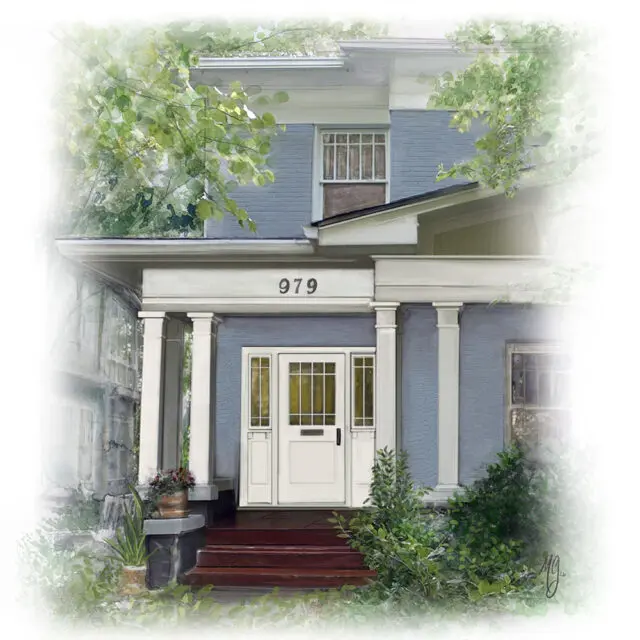
Virginia-Highland is effortlessly “Atlanta.” Beneath a dense canopy of century-old oaks, “VaHi” is historic without feeling stale, walkable by design, and defined by deep front porches and neighborhood joints where the bartender knows your order. More than a century after the first streetcars laid its foundation, VaHi remains a place where architectural character and a fierce sense of community have stubbornly stood the test of time. Today, roughly 9,000 residents call Virginia-Highland home, drawn by a neighborhood where nearly everything from dinner and drinks to boutiques, parks, and schools, is within walking distance. Three compact commercial districts are lined with locally owned restaurants, coffee shops, and independent retailers, while the bustle of Midtown and the Ponce corridor are just moments away. Strict preservation of Virginia-Highland’s low-rise character means century-old bungalows, cottages, and Tudor Revival homes still define the skyline, with no high-rises to compete for attention. It’s a neighborhood that has embraced thoughtful change while preserving the charm, walkability, and strong sense of community that made Atlantans fall in love with it in the first place.
History
Originally developed in the early 1900s as one of Atlanta’s first streetcar suburbs, Virginia-Highland flourished thanks to the trolley line connecting residents to downtown. The neighborhood takes its name from the intersection of Virginia and Highland avenues. The graceful curves at Virginia Avenue and North Highland weren’t designed for aesthetics, but because the Nine-Mile Circle trolley couldn’t make sharp turns. More than a century later, you can still “read” the original trolley route simply by following the streets. The original trolley stops formed the commercial nodes that remain the heart of community life today: Virginia and Highland, Atkins Park, Amsterdam, and Monroe. By the late 1960s, much of the neighborhood had been slated for demolition to make way for Interstate 485. Residents organized, challenged the project, and ultimately prevailed in one of Atlanta’s defining preservation victories. Even the neighborhood’s name reflects that era: Opponents of the highway formed the Virginia-Highland Civic Association, intentionally reversing the name of the pro-highway group, and the name Virginia-Highland became permanent. Land once condemned for the interstate became John Howell Memorial Park, hosting today’s soccer games, concerts, and picnics.
2.9M
Highest sale (last 12 months)
1.48M
Average sale price (last 12 months, single-family homes)
2,928
Average square footage (for sales last 12 months, single-family homes)


IYKYK
Atkins Park Restaurant & Bar is a neighborhood landmark that began life as Atkins Park Delicatessen in 1922, when its owners did something remarkably inventive: They jacked up the house, built a commercial space beneath it, lived upstairs, and operated a deli and grocery below. Following Prohibition, it evolved into a tavern and proudly holds the distinction of being Atlanta’s oldest continuously licensed tavern. More than a century later, Atkins Park remains one of the neighborhood’s most beloved gathering places.
Big Brag
What began in 1984 as a modest neighborhood block party organized by local restaurateur Warren Bruno has exploded into the Virginia Highland Summerfest, one of the Southeast’s premier arts festivals. Every year, it draws over 50,000 visitors and 200 artists to kick off the season. Summerfest has funneled hundreds of thousands of dollars directly back into local schools, the historic fire station, the public library, and parks. It’s a festival built by the neighborhood, for the neighborhood.
An Iconic Va-Hi Bar Crawl
The Warm-up: Start with a leisurely brunch on the patio at Murphy’s.
The Legend: Head to Atkins Park for a classic burger and a local draft at Atlanta’s oldest tavern.
The Sweet Treat: Grab a scoop of artisanal gelato from Paolo’s.
The Subterranean Escape: Slip down the stairs into Highland Tap, a moody, stone-walled basement steakhouse famous for its ice-cold martinis (and their side cars).
The Nightcap: Finish the night rubbing elbows with locals at Moe’s & Joe’s, where Atlantans have been raising cheap PBR pitchers since 1947.
Mascot
A classic porch swing (the best seat in the neighborhood).
Future
The VaHi commercial core is experiencing an incredible wave of coordinated investment, led by two major developers focusing on neighborhood preservation rather than demolition. First, Atlanta-based developer Third & Urban is moving forward with the Atkins Park Collection, a 61,000-square-foot adaptive reuse makeover stretching from St. Charles to Greenwood avenues; backed by a $3 million investment for facade updates and a signature indoor-outdoor dining courtyard at 780 North Highland. Additionally, 26th Street Partners (owners of Krog Street Market) made a splash by purchasing a historic, two-part retail portfolio for $17.3 million. Their investment focuses on preserving hyper-local staples, spanning both the iconic building at Virginia and North Highland avenues (home to Paolo’s Gelato) and the Highland Avenue Market at Amsterdam Avenue (home to San Francisco Coffee and Mali Restaurant), cementing the area’s shift toward revitalized, pedestrian-friendly daytime retail.