







Where Southern Lake Life Still Feels Authentic
Lake Martin continues to attract generations of families with timeless architecture, understated luxury, and a shoreline that remains remarkably true to its roots
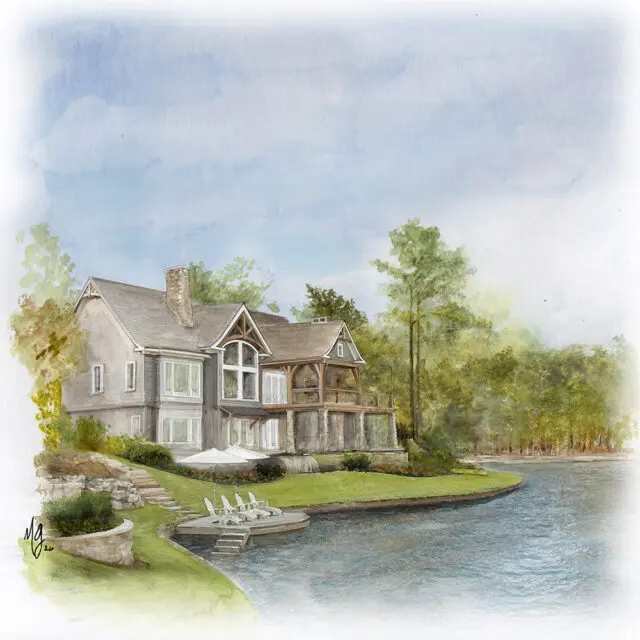
Lake Martin has quietly been part of Southern lake culture and social fabric for generations, even though it enjoys being more off the radar than other Atlanta-adjacent lake communities. Located in East Central Alabama, approximately two hours from both Atlanta and Birmingham, the 44,000-acre lake has become a beloved second-home destination for Alabama and Atlanta families seeking a more serene version of lake life. Shorelines remain densely wooded, architecture tends to blend into the landscape, and many homes prioritize gathering spaces over grandeur. The aesthetic is best described as elevated Southern lake camp: expansive screened porches, natural stone and rough-hewn woods, bunkrooms filled with cousins and friends, docks that function almost like outdoor living rooms, and outdoor kitchens designed for get-togethers.
History
Lake Martin was created in the 1920s with the construction of Martin Dam by Alabama Power, and at the time of its completion, it was considered the largest man-made lake in the world. The hydroelectric project transformed the region permanently, flooding thousands of acres and creating more than 750 miles of shoreline. Over time, what began as a utilitarian infrastructure project evolved into one of the South’s defining recreational lakes. Early lake cabins were modest and practical—simple fishing retreats and family camps designed for long summers outdoors. No discussion of Lake Martin is complete without Russell Lands, the family-owned company that has shaped much of the lake’s residential character for generations. The Russell family’s connection to the region dates back to the mid-1800s, but their influence on Lake Martin began following the creation of the lake. Recognizing the long-term value of the shoreline, the family assembled and preserved thousands of acres, ultimately creating Russell Lands. Beginning with Willow Point Golf & Country Club in the 1960s and the Willow Point community in the 1970s, the company pioneered a development philosophy centered on preserving the natural landscape rather than overpowering it.
By the Numbers
$1.52M
Average waterfront residential sales price
$911K
Average waterfront lot price
$409.9M
Annual residential sales volume
22
Waterfront homes sold above $3 million
“One of the things I love most about Lake Martin is that it balances natural beauty with a strong sense of community. Spend the morning at church and afternoon on the water, attend a concert at The AMP, and have dinner overlooking the hills. It has a way of feeling both vibrant and wonderfully unhurried at the same time.” —Ashley Gilbreath, Designer & Lake Martin Resident
IYKYK
Visiting Chimney Rock is an unofficial rite of passage for brave Lake Martin insiders—the lake’s famed cliff-jumping spot has become legendary and remains one of Lake Martin’s most loved traditions.
Big Brag
For a lake of its size, Lake Martin punches above its weight in architecture and design. Some of the South’s most respected residential architects—including Bobby McAlpine, Bill Ingram, and Jeff Dungan—have left their mark on the shoreline, creating homes that are frequently published and honored. Communities such as The Ridge, Willow Point, and The Heritage have elevated expectations for waterfront architecture, emphasizing timeless design, natural materials, and a deep connection to the landscape.
Real Estate
Over the past year, waterfront residential sales volume approached record levels, while average and median home prices reached all-time highs. The luxury market has enjoyed sales between $2 million and $3 million nearly doubling year-over-year, and properties above $3 million continue to see strong demand, particularly so for new-construction residences, with newly built waterfront homes often selling quickly once released. While growth is expected to continue, Lake Martin’s appeal remains rooted in scarcity. Many believe the lake’s greatest asset is that it still feels much like it did a generation ago—only with a few more restaurants, a better healthcare system, and considerably higher property values.
Mascot
A vintage Chris-Craft boat (very likely sporting an Auburn University flag).
Future
Perhaps the most anticipated future development is Ridge Island, a 150-acre island that has quietly sat undeveloped for nearly a century. Created when Alabama Power completed the Cherokee Bluffs Dam and Lake Martin was first impounded in 1926, the island has remained largely untouched despite a bridge connecting it to The Ridge. Coinciding with Lake Martin’s 100th anniversary this past June, Russell Lands released the first homesites on what is now known as Ridge Island. When complete, the island is expected to include approximately 50 waterfront homesites, making it one of the most exclusive residential addresses on the lake. The first phase includes 16 estate lots averaging 1.28 acres and nearly 300 feet of waterfront, along with two family compound lots exceeding 10 acres and more than 600 feet of shoreline. Ridge Island will function as a private gated enclave within The Ridge, one of Lake Martin’s premier master-planned communities. Residents will enjoy access to The Ridge Club, marina, beachfront park, boat ramp, fitness facilities, tennis and pickleball courts, and one of the most extensive amenity collections anywhere on the lake. For many longtime Lake Martin residents, Ridge Island represents one of the most significant land releases in decades—a rare opportunity to own property on a piece of the lake that has remained off-limits since the day the waters first rose around it.